
Repair and Restoration: A Conversation with The Kansas City Museum
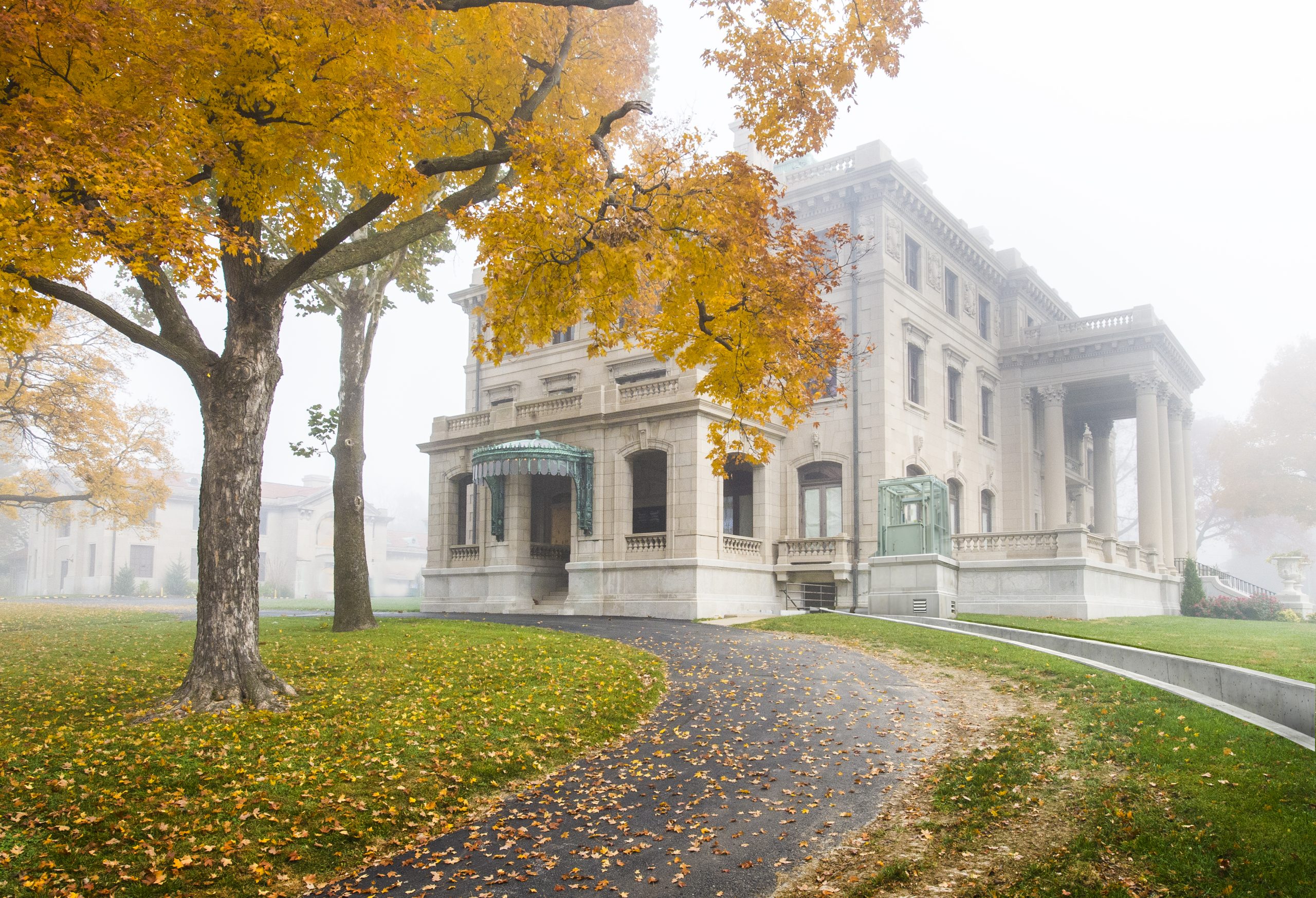
Quietly perched on a bluff in the Historic Northeast neighborhood is the Kansas City Museum. Once the private estate of the Robert and Ella Long family, the Kansas City Museum is full of robust multicultural stories of Kansas City and its people. The Kansas City Museum has reinvented itself as a hub for historical preservation while celebrating the unfolding stories of today’s Kansas City community.
Senior Philanthropic Advisor Whitney Hosty sits down with Anna Marie Tutera, Executive Director, to hear about the preservation and renovation of the historic museum.
Below you’ll find the conversation.
Interview Highlights
The following exchange has been edited for length and clarity.
Whitney Hosty:
I’m looking forward to this conversation. To start, could you tell me a little bit about the Kansas City Museum and its journey from inception to the present day?
Anna Marie Tutera:
Sure. It’s a pretty long journey, and like any good story, it has trials, tribulations, challenges, successes, and lots of people who have come together to get us where we are today. The Kansas City Museum property was originally built as a private residence for Robert Alexander Long and his family. Robert Alexander Long was a lumber baron, a philanthropist in Kansas City. He originally came from Kentucky and made his way first to Columbus, Kansas, before coming to Kansas City, Missouri. He started the Long-Bell Lumber Company, which was headquartered in Kansas City, Missouri. He had two daughters, Loula and Sally, and a wife, Ella. And shortly after, they built Corinthian Hall, which is the Kansas City Museum. Several years later, they built Longview Farm. And Longview Farm was their model-working farm, and Corinthian Hall was their primary home, their city residence, if you will.
The Longs lived in Corinthian Hall up until 1934. Mrs. Long died in 1928, and Mr. Long in 1934. The two daughters then donated the property to the Kansas City Museum Association, which was a group formed to create Kansas City’s first history museum. That opened in 1940. By 1948, the association asked for financial support from the city, and the city stepped in to purchase the buildings and the grounds while the Kansas City Museum Association continued to manage the museum. The museum has been around for quite some time. It originated as a collecting institution and has been collecting since 1939. At this point, we have amassed a collection of over 100,000 objects that document, interpret, and celebrate Kansas City’s history.
In the late 90s, Union Station became part of the Kansas City Museum story. Union Station and the Kansas City Museum Association came together to manage the property. And then in 2013, that relationship changed. The Kansas City, Missouri Parks and Recreation Department stepped in to give the Kansas City Museum a new opportunity to go through comprehensive architectural design planning and master planning, and really, finally get this project up and running.
So, in May 2014, I joined the Kansas City Museum team under the auspices of the Kansas City Parks and Recreation Department. And since that time, we have been working on the restoration and renovation of Corinthian Hall, the master planning of the entire property, and building the capacity of the Kansas City Museum Foundation, a nonprofit organization that governs, manages, and operates the Kansas City Museum. And that is where we are today. Over a year ago, the Kansas City Museum Foundation took over the governance, management and operations from the park department. We all became nonprofit employees, and the foundation has also recently become the owner of all the collection materials that were previously owned by the city. The large collection I just mentioned is co-owned by the Kansas City Museum Foundation and Union Station. As I said, it’s been a long and winding journey to get here, but we are extremely proud of where we are today.
Whitney Hosty:
Great. Well, thank you for that great summary of over 100 years of the museum’s history. For those who haven’t visited the museum or haven’t been in a while, can you help set the scene? Tell us a little bit more about the neighborhood, where the museum’s located, and how community investment plays a role in the project and the museum’s continued development.
Anna Marie Tutera:
The Kansas City Museum is very proudly located in the Historic Northeast area of Kansas City, Missouri. The Historic Northeast is comprised of six neighborhoods and has more than 35,000 residents. This area was one of the original neighborhoods of Kansas City, populated by many early immigrants to Kansas City. The Kansas City Museum is adjacent to the historic park called Kessler Park and the Scenic Byway called Cliff Drive. We have always worked with the Historic Northeast, with our residents, with our neighbors on the renovation of Corinthian Hall, which is the first building that we have restored and renovated. And what I mean by that is that our neighbors and the Historic Northeast have worked very, very hard over many, many decades to help this museum team and previous museum teams to reimagine the rebirth of the Kansas City Museum.
So, for that, we are really thankful because it takes a tremendous amount of support. We are a museum located in a neighborhood, and we work hard to ensure that our programs and offerings reflect the rich diversity of the Historic Northeast and the overall diversity of the Kansas City metropolitan area. We truly believe that museums can be catalysts for social change, for systemic change and civic unity. We believe that museums can be catalysts for equitable development in the city, and we like to always say that the Kansas City Museum supports the equitable distribution of arts and culture throughout the city. We are working really hard to ensure that meaningful arts and culture, history and humanities programming and offerings are throughout our city and not just confined to one neighborhood or one geographic district.
Whitney Hosty:
Thank you. You’ve mentioned a little bit about some of the recent renovation and restoration work. Could you tell us a little more about what’s happened to date and what the plans are for the immediate and longer-term future of the museum’s property?
Anna Marie Tutera:
Yes. We have been focused on the restoration and renovation of Corinthian Hall for all these years, which spans approximately 35,000 square feet. When I came to the museum in May 2014, it was a little daunting because the building had really dilapidated. There were some notable core renovations made between 2005 and 2012 that really helped give us a head start on the more comprehensive work that we had to do. But still, in fact, there were holes in the walls, and the interior stripped to the studs, and gray paint over the original beautiful colors. There was a lot that needed to be done. We have worked with and continue to work with international architects, Atelier, who’re our primary architectural firm, as well as JE Dunn Construction. Our exhibit team is Gallagher & Associates and Kubik Maltbie.
And we came together with Kansas City-based historians, educators, artists, and curators to create the experience and the exhibits that are now in Corinthian Hall. On the first floor, we worked diligently to ensure that visitors understand the history of the home, the Long family, their impact in Kansas City, and the process of the architectural renovation project. The second floor features our timeline galleries of Kansas City’s history, which take you on a chronological and thematic journey through the city’s history.
The third floor continues that experience with all changing galleries as well. We take you all the way up to the present day, which differs from the experience of past Kansas City Museum visits that people might have had. We are going all the way up to the present day, and we are focusing on the often untold stories of Kansas City’s history and its people.
Whitney Hosty:
And I’m curious, are there any other models or examples of this sort of place-based museum in other communities or museums that focus on more of those untold stories? Are there others that you look outside of Kansas City for inspiration?
Anna Marie Tutera:
Yes, we looked at one in particular that was a model for us, which was the Museum of the City of New York. And they do something very similar where they focus on the history of the city, but they’re also kind of the first stop that you want to make when you go to New York to learn about all of the other offerings in the city. And they have very dynamic exhibits on what’s currently happening in the city and future developments. So that was a model that was very inspirational for us. But in general, I would say that we knew from the beginning that we wanted the Kansas City Museum to be very forward and future-thinking. We wanted the Kansas City Museum not only to provide educational opportunities about the city’s history but also to create opportunities that would inspire more engaged citizens, especially youth. We wanted exhibits that are relevant and responsive, helping the visitor understand what they can do today to make an impact in Kansas City and that we are making history every day.
The choices that we make are important. Our individual personal stories are important. Where we come from is essential to who we are. We believe that creating programs that also focus on identity, belonging, and engagement is crucial for the residents of this city. And again, especially for youth. We have also adopted a restorative practices methodology for developing our exhibits, programs, and events at the Kansas City Museum. And what that means is that we understand that if we tell the whole story of our city’s history, including stories that have often been left out and histories that have been overlooked, we have an opportunity for healing. We have the opportunity to repair harm, repair relationships, restore trust between individuals and their communities, and create a more just and unified city in the process.
And that methodology, I will say, is very, very unique to the Kansas City Museum experience. I believe we are probably one of, if not the only institution, certainly locally and regionally, that fully embraces this methodology and makes it a guiding principle and value in creating our experiences at the Kansas City Museum. We are currently working with the International Institute of Restorative Practices on a two-year endeavor to formalize that methodology, even in our policies and practices. And I don’t know exactly what that’s going to look like yet, but it’s embedded in our strategic and business planning that we are doing now.
Whitney Hosty:
That’s exciting to hear about the opportunity for Kansas City to be a leader in this space. I’d love to revisit your comments about the museum being forward-looking and future-thinking. What do you see, and what do you plan for some of those other developments to happen at the museum in the coming years?
Anna Marie Tutera:
Well, we’re really excited because we are working on architectural design and development for a couple more projects. We still have the rest of the property to renovate. We have a big task ahead of us, but we will continue at the same pace we’ve been going. We recognize that we must continue to be intentional and inclusive in our approach, as we have been, building more trust along the way. And all of that takes time; we have to really embrace the amount of time it takes to do this type of project really well. Having said that, we have started architectural design on our James Turrell Skyspace, which I’m really excited about, on the restoration and renovation of the conservatory into what we are calling JewelHouse by artist, Summer Wheat and the design of the Carriage House with the first part component of that being the reinterpretation and new design of the Carriage House weather vane that originally sat atop the cupola. We no longer have that beautiful piece, and artist Ed Dwight is re-imagining that for us.
We will continue to create spaces of restoration and reflection. The Carriage House, in particular, will feature more interpretation, exhibits, assembly space, and administrative offices. The core of the Carriage House interpretation will be on Kansas City’s equestrian history. Of course, we will talk about Loula, and we will also talk about others who really help to create the industry, the jockeys, the trainers, all of those who came together to make a huge impact in Kansas City’s equestrian history.
For example, Ed Dwight’s piece will bring together two stories. It’ll bring the story of Loula Long and the story of Tom Bass. And Tom Bass was the first African American to show in the American Royal. He was born into slavery. He was known nationally and internationally, and he worked with Loula. So, these two beautiful stories are going to come together through that weather vane. And for Summer Wheat’s JewelHouse, we are creating a sacred space that I would say celebrates the stories of women and girls. It’s going to be this very light-filled, beautiful space. We’re bringing back the windows around the perimeter of the conservatory, which was originally used to store winter plants. We’re bringing back the beautiful copper and glass roof, and it will be a space for programs and events for everyone. But in addition to that, centering those stories of women and girls.
And then the Skyspace will be a beautiful compliment because it will be an homage to the former planetarium. So, I think it will evoke those wonderful memories of that iconic feature. But bring it up to date. The Turrell Skyspace is very much about the vastness of space, time and history. And the JewelHouse is very much about the vastness of your inner light and your inner story. So, they complement each other very beautifully. We plan to restore and renovate the former horse trainer’s home on the property into our hub for the historian and residence program, as well as additional administrative offices. And then we have an opportunity on the northeast side of the property, where there was a greenhouse originally, to create a small outdoor amphitheater to continue our music programming.
Whitney Hosty:
Wonderful. I’m excited to watch this development unfold and visit many times over the next several years. Can you talk a little bit about how something like this becomes reality? Maybe talking a little bit about any public-private partnerships that happen to make this happen, and what role philanthropy plays in all of this?
Anna Marie Tutera:
Absolutely. We designed this project as a public-private partnership between the City of Kansas City, Missouri, and the Kansas City Museum Foundation. And that was essential. The Kansas City Museum receives annual public funding, which supports its operations in part. We were very fortunate to be included in the 2017 general obligation bond package. We were thrilled that our community voted yes to question number three, which allowed geobond funding to come to the Kansas City Museum, specifically $8 million for Corinthian Hall. Corinthian Hall’s overall project budget was about 22 million. The $ 8 million made a huge difference, and it gave us the opportunity to approach private funders and ask them to partner with the foundation and the city to make this project a reality. Private funding philanthropy is critical for us, like it is for any nonprofit, any museum or cultural institution in the city. We could not have done this project without private funding.
We also received an allocation of 1 million through the Missouri Development Finance Board. That was incredibly helpful in incentivizing funders and encouraging them to continue giving. All of these components coming together have helped us get where we are today. And I am really proud of how our community has not given up on the Kansas City Museum project, given us time to regroup, rebuild and help us reach our vision. And I think that, at its core, is what has inspired so many people to give: the strong mission and vision of the Kansas City Museum. I hope that this trend continues as we progress through the rest of this project.
Whitney Hosty:
Yes, thank you. Anne Marie, is there anything else you’d like to add today?
Anna Marie Tutera:
I would like to add two things. One is that we have an amazing board of directors. I am so proud and honored to work with them. I’ve been in the museum field for 25 years now, and this is an incredible group of people who are so profoundly dedicated to the museum. We couldn’t be where we are today without them. And also, our staff. We have a small but very mighty staff who are dedicated to the museum profession. And that makes all the difference, too, having people a part of our team who are committed to history and the humanities and have dedicated their lives professionally to working for museums and cultural institutions.
Because we have all kind of been in this field for quite some time, we recognize that right now it is so important to focus on what we call generational leadership. So, we are going to be developing a workforce development program that focuses on paid internships and employment opportunities for 16-year-olds and up because we really want this generation and the next generations to know that there are viable career opportunities in museums and educational institutions and arts and culture. So, we’re hoping to share more about that soon.